Choosing a lighting composition for a dining table or island
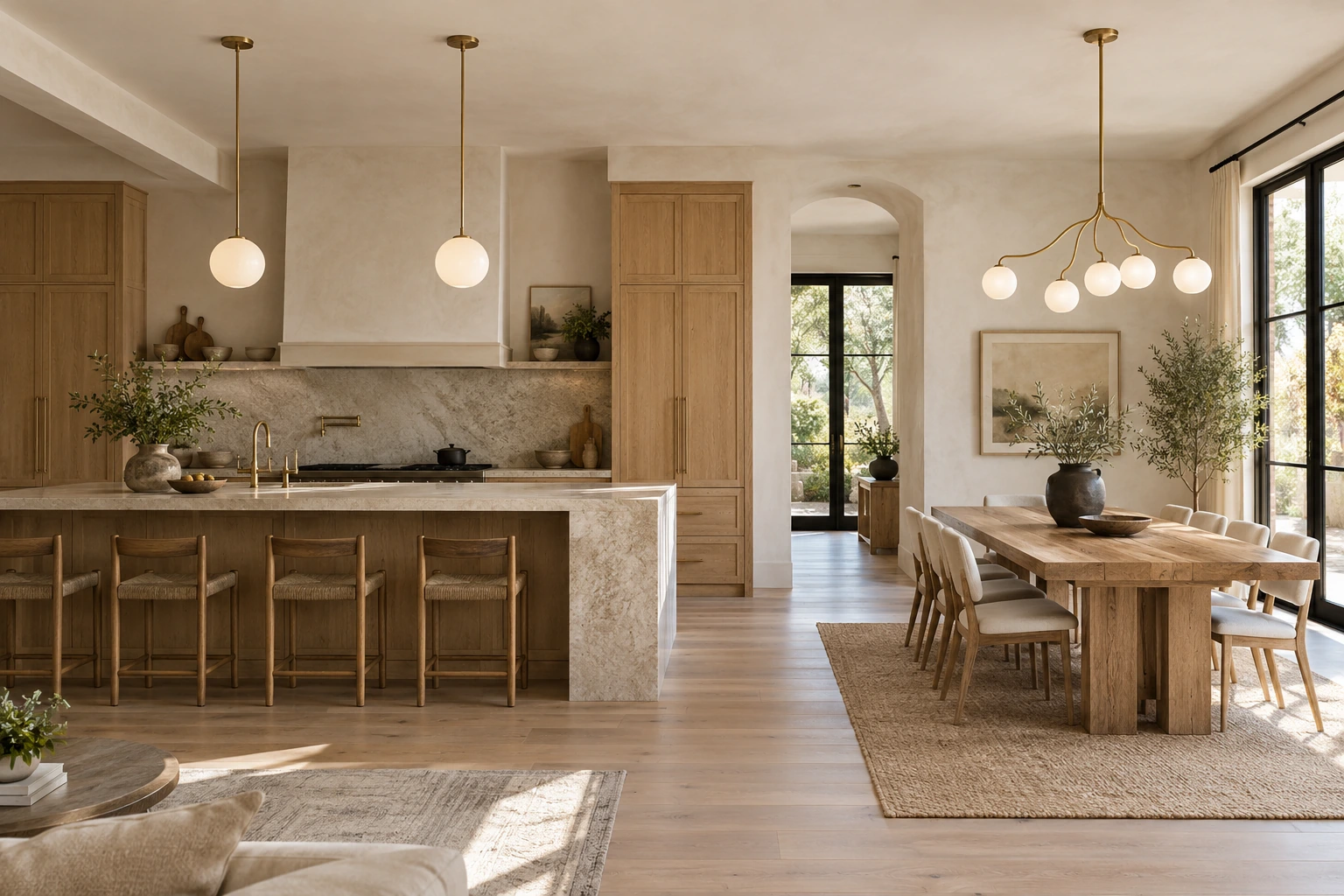
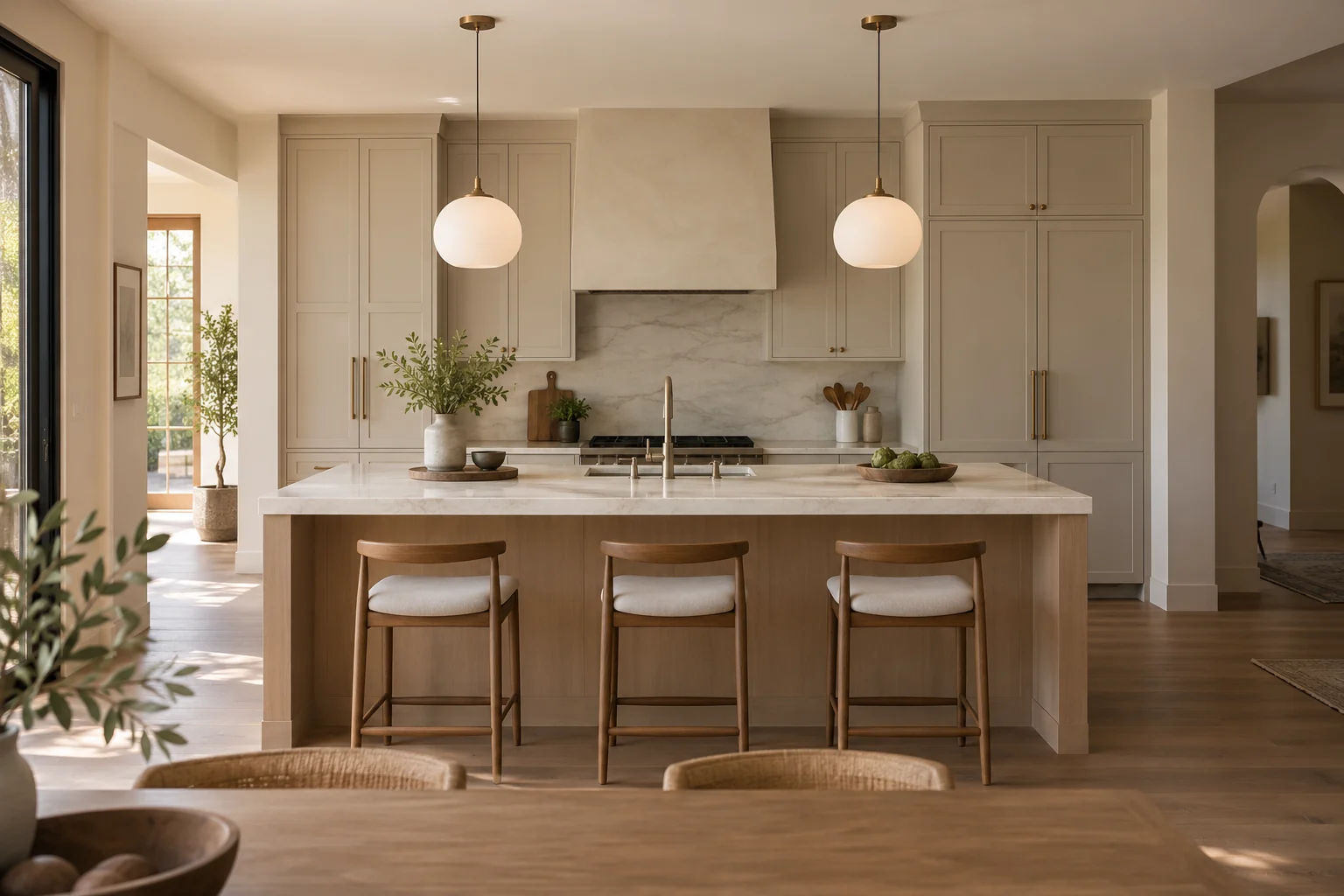
The table or island gives the composition its frame. Compare one continuous gesture with a sequence of smaller suspended forms.

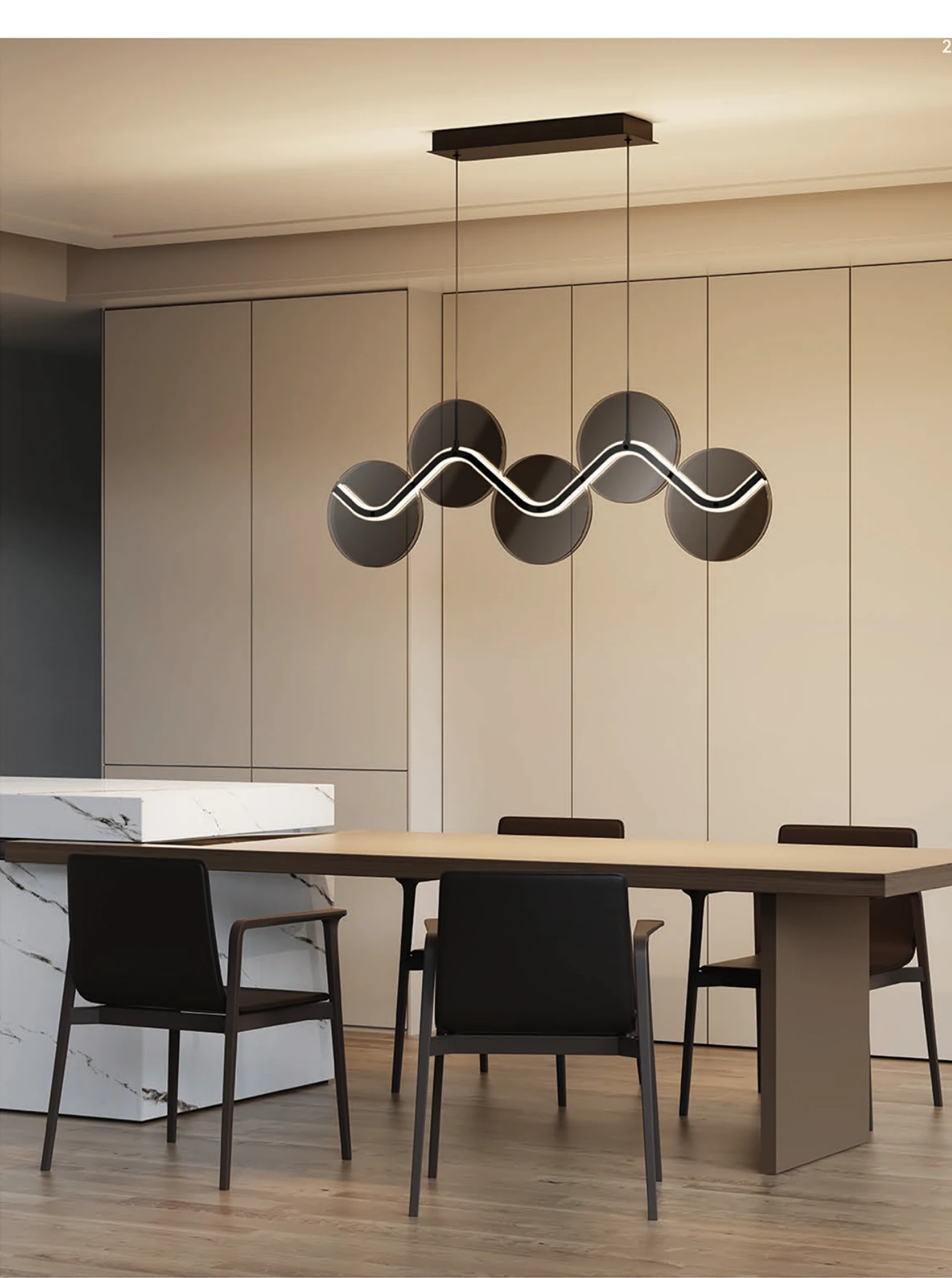
The surface below a light gives it a visual frame. A long dining table or kitchen island can support different compositions: one continuous form, or a sequence of smaller elements. Before considering a model, look at the length of the surface and how people approach it.
Read the room from its everyday paths
Consider the view on entering the room, the view from seated positions and the view from any adjacent space. An elongated fitting may become a strong line from one angle and a more compact shape from another. Repeated pendants can make the length of a table feel rhythmic without reading as a single object.
The table’s position also matters. Is it centred under a ceiling area, or set beside a kitchen run? A photograph that includes the surrounding room helps place the composition in context.
One form or a rhythm of forms
Mirora offers a continuous, wave-like direction. It can be read as one sculptural line across the dining area. Butterfly offers linked forms that can be considered as a pendant rhythm. The dining table and kitchen island guide compares these directions using the site’s catalogue references.
This is a visual comparison, not a sizing formula. A catalogue photograph shows a particular setting and composition; it cannot settle the right length, drop or fixing arrangement for another room.
Bring the useful details
For an initial discussion, share the surface dimensions, approximate ceiling height and a few photographs from the main views. If you have a plan, it can clarify the relationship between the table, kitchen and nearby circulation. You can also simply say which visual direction appeals to you.
Jun Lighting can then discuss the selected reference in the context of your project. Start an enquiry with your room and preferred composition, even if the dimensions are still approximate.